EARLY ACCESS SALE Ends on September 27, 2026
A PRACTICAL, FLEXIBLE SYSTEM FOR MAKING SLEEP MAKE SENSE
You Don't Need
Another Sleep Trick.
You Need to Know
What Makes Sense Tonight.
Sleep Flow helps you understand how your sleep needs change, recognize the patterns and blockers showing up in your nights, and choose a sleep-supporting move that fits the kind of night you’re actually having—without building your life around a rigid routine.

Watch the short video to see why familiar sleep solutions work on some nights, fail on others, and how Sleep Flow helps you decide what fits.
Start Tonight.
Not Someday After You Buy.
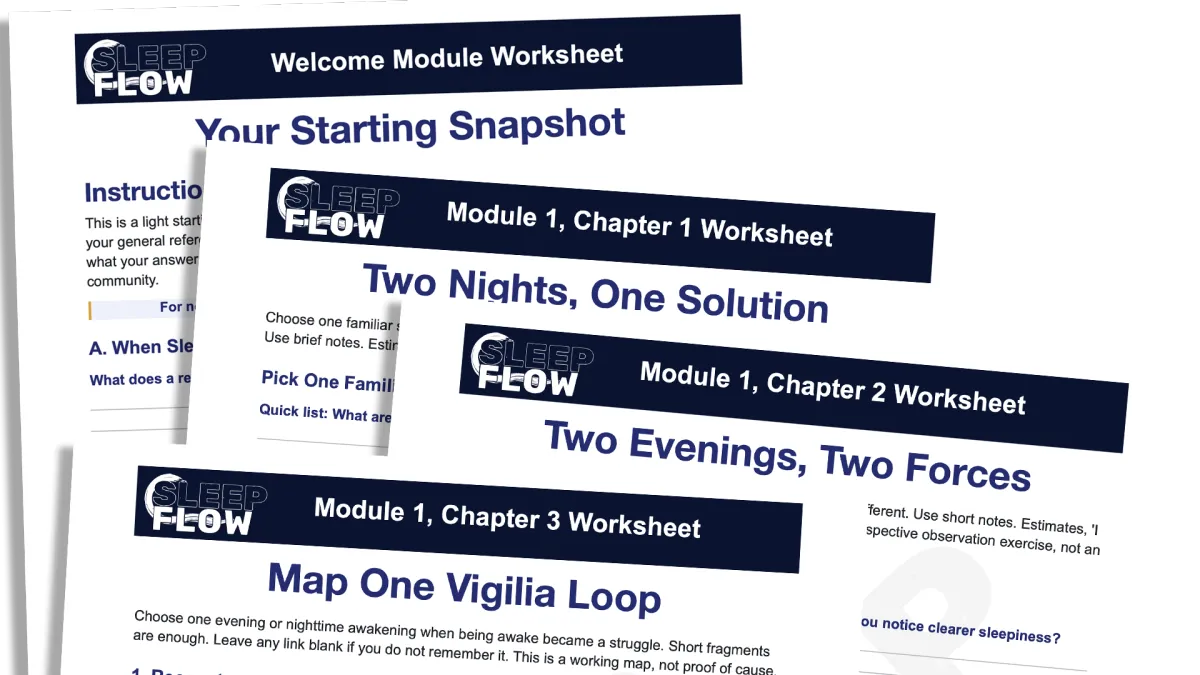
Join Sleep Flow and receive immediate access to the Welcome Module, the complete First Module, four guided worksheets, and the Founding Member community.
Your first milestone: begin creating your starter Sleep Signature snapshot—your first clear picture of the patterns, blockers, and conditions that may be affecting your sleep.
EARLY ACCESS SALE!
Enroll before September 27, 2026 and get:
Immediate Access to the First Module
Lifetime Access to the Sleep Flow System
30-Day Money Back Guarantee
Immediate Access to the Founding Member Community and 30-Day Implementation Circle for questions and feedback
Over 50% off the regular price
(Founding Cohort price of $47 ends September 27, 2026)
$47 Founding Cohort Access through September 27 • 30‑day money-back guarantee • Start tonight
The Problem Probably Isn’t That "Nothing Works."
Maybe It’s That Nothing Works Every Night.
You probably already know the usual advice.
You may have tried teas, supplements, apps, meditation, blackout curtains, special pillows, earlier bedtimes, stricter routines—or enough online advice to qualify for a minor in sleep.
Maybe something even helped for a few nights.
Then, for no obvious reason, it stopped.
That does not mean you imagined the improvement.
And it does not mean your body somehow forgot how to sleep.
The tool may have matched what was interfering with sleep for a while—until your timing, stress, schedule, body, surroundings, or strongest sleep blocker changed.
The worst part is not simply being tired.
It's reaching bedtime without a clear way to decide what to try next.
Should I take something?
Meditate? Get out of bed?
Change the room? Go to bed earlier?
Or… just lie there and hope?
Every option starts to feel like another roll of the dice.
And the next day pays for it—with less focus, patience, and energy for the life waiting for you.
Sleep Flow was built to replace that guessing with a practical way to recognize what appears to matter tonight—and choose a response that fits.
Sleep Is Personal and Dynamic.
The Context Matters.
Most sleep tips address one particular influence on sleep.
If that influence is not especially important tonight, the tip may do very little.
Sometimes the tool is reasonable; it simply does not fit the situation.
Take "go to bed earlier" for example…
If your schedule has been squeezing sleep out, an earlier bedtime can create more opportunity for sleep.
But, if you slept late that morning, took a substantial nap, or simply are not sleepy yet, going to bed earlier may only create more time to lie awake.
The advice did not suddenly become bad.
Your body did not forget how to sleep.
The situation changed.
Personal does NOT mean "mysterious."
Dynamic does NOT mean "random."
It means Context matters.
So when a strategy gives you mixed results, do not begin with, “Why am I so bad at sleeping?”
Instead ask,
“What was different about the nights when this helped,
and the nights when it did not?”
That question turns a failed fix into information.
Sleep Flow shows you how to make that information useful.
The Tools Are Not Necessarily Useless.
What’s Missing Is a Way to Choose.
Relaxation can help when mental or physical activation is keeping you alert—but it cannot force your body to be sleepy on command.
A sleep tracker can give you information—but it cannot always tell you what to do with that information.
A routine can support sleep—but if it only works when every evening goes according to plan, real life will eventually break it.
A supplement or product may help when it matches the issue—but buying another solution does not automatically tell you whether it matches.
Free tips give you options.
Sleep Flow gives you the ability to choose.
How SLEEP FLOW Works
A Simple Way to Read the Night
Before Choosing the Move.
Sleep Flow teaches you to work through the context of your sleep with four practical questions:
1. Recognize
What kind of night am I having?
2. Consider
What does my body or mind seem to need tonight?
3. Choose
What sleep-supporting move makes the most sense?
4. Learn
What can I learn from what happens?
You are not trying to diagnose yourself, or prove what caused one particular night.
You are learning to make a reasonable choice, observe what happens, and let the pattern become clearer over time.
Those patterns gradually form your
Sleep Signature:
an evolving map of the tendencies, habits, recurring blockers, and changing conditions that affect your sleep.
It is not a permanent sleep type.
It is not another label.
It is useful information about you.
Immediate Module One access • Lifetime course access and updates • Founding Cohort price: $47 through September 27
By the End of Sleep Flow You'll Have:
A starter Sleep Signature Snapshot built from your own observations—not a generic sleep type assigned to you.
A clearer picture of the patterns, blockers, and changing conditions that may be affecting your sleep.
The four-question Recognize, Consider, Choose, and Learn process for slowing down the nightly guessing.
A flexible decision system you can use when bedtime becomes difficult or the usual routine does not fit.
A way to treat failed fixes as information instead of proof that you are broken or simply a “bad sleeper.”
A dependable "Sleep Home Base" with enough flexibility to survive busy evenings, changing schedules, stress, and real life.
A calmer alternative to buying, trying, and abandoning another random sleep solution.
Trust Note: Sleep Flow does not promise that every night will become easy. It is designed to help participants understand what appears to be happening, choose a reasonable response, and adapt without becoming rigid or obsessive.
Your First Sleep Signature Clues Begin Tonight.
Module One is available immediately.
It is designed to help sleep start making sense before asking you to overhaul your nights.
Through short lessons and guided observations, you begin learning:
Why the same sleep solution can help on one night and do very little on another.
How to use the Four-Question Sleep Flow lens without turning sleep into an investigation.

Why feeling exhausted is not always the same as feeling sleepy—the familiar “tired but wired” experience.
How sleep pressure and circadian timing influence when sleep may feel more or less available.
Why sleep cycles are not identical ninety-minute units and why a tracker estimate is not a verdict on how well you slept.
How worry, monitoring, forcing, scrolling, and spending long periods awake in bed can become part of a Vigilia Loop that keeps wakefulness going.
The four guided worksheets help you compare real experiences, notice useful differences, and create a starter picture of your own patterns before selecting solutions.
You are not being handed busywork.
You are beginning the skill the entire program is designed to build:
Recognize what appears to matter, choose what fits, and learn from what happens.
From “Why Isn’t This Working?”
To A Personal Sleep Flow
Module One:
Make Sleep Make Sense
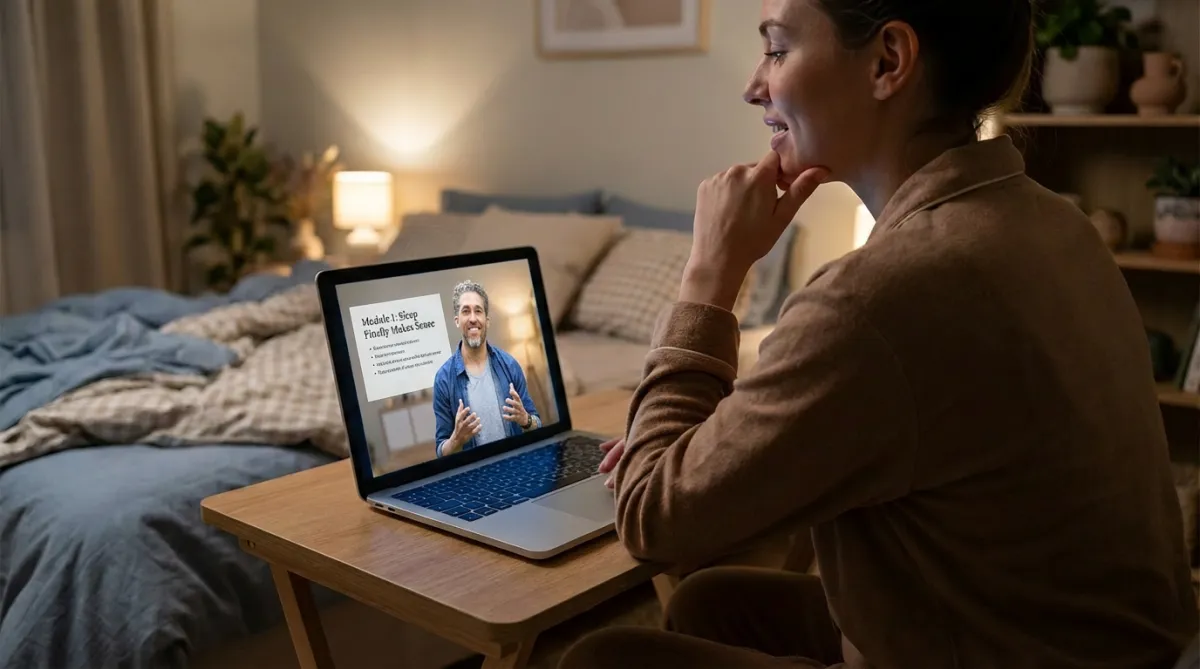
Learn the practical foundations that explain why you can feel exhausted without feeling sleepy, why sleep may feel available at one time and not another, and how to begin creating your starter Sleep Signature snapshot.
So your nights stop feeling quite so random.

Module Two:
Build Restful Nights
Learn to recognize the evening patterns and blockers that may be keeping wakefulness going, then connect different influences with sleep-supporting responses.
So you can understand the problem before choosing a solution.
Module Three:
Use Your Day to Support Your Night
Look at the daytime choices and changing conditions that can make sleep easier or harder later—including timing, energy, stress, and recovery.
Because better sleep does not begin only at bedtime.

Module Four:
Build Your Personal Sleep Flow
Bring everything together into a dependable sleep home base, flexible versions for real life, and a decision process for nights that start going sideways.
So you can adapt without throwing away the entire routine and starting over.
The Lessons are Short and the Exercises Practical.
Many sections can be completed in about fifteen minutes. One section per day is a reasonable average, but the program is self-paced—the point is to apply it, not race through it.
Immediate access • Lifetime course access and updates • Founding price ends September 27
Early Access to
A Supported Rollout
Start immediately with the complete first module.
Then, continue through weekly releases while you have time to use each part of the process.
After the rollout, every module remains available through your lifetime access.
Available Immediately: Welcome + Complete Module One
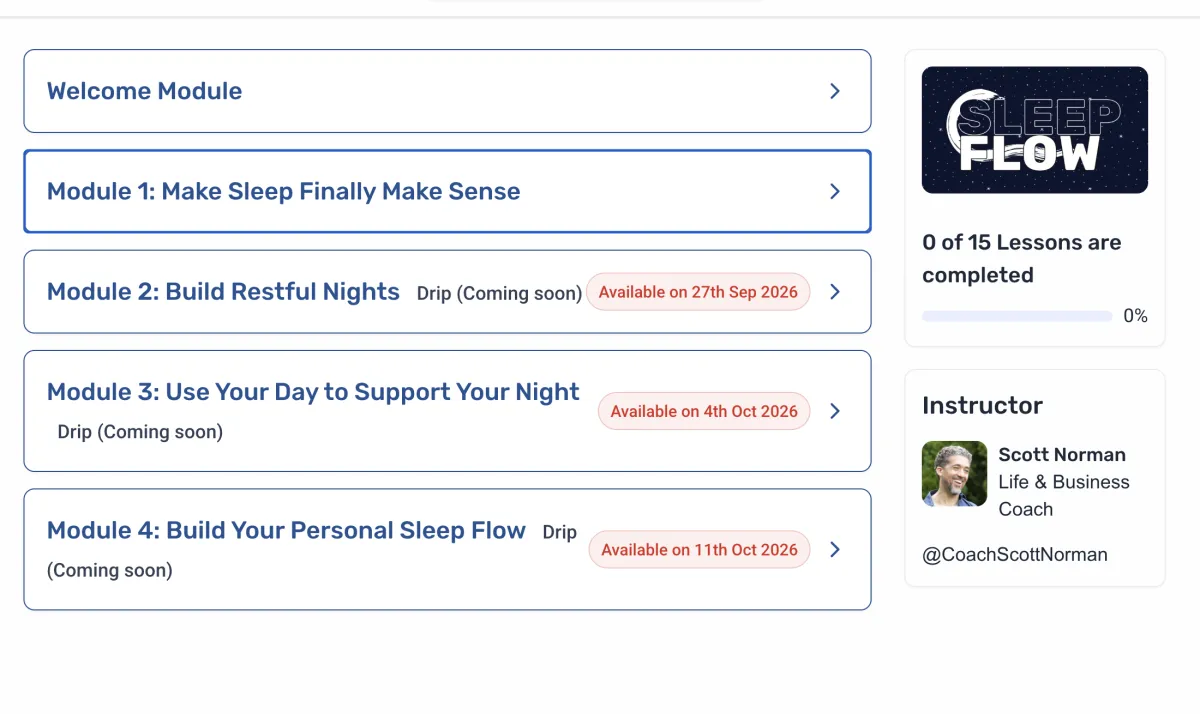
Begin your starter Sleep Signature snapshot and guided observations.September 27: Module Two
Build more restful nights by recognizing evening patterns and blockers.October 4: Module Three
Use daytime choices and changing conditions to support the night ahead.October 11: Module Four
Assemble your flexible Personal Sleep Flow and nightly decision process.September 20~October 19: Implementation Circle
Ask questions, share observations, and apply the course with support.
I Needed More Than an Evaluation—or Another Tip.
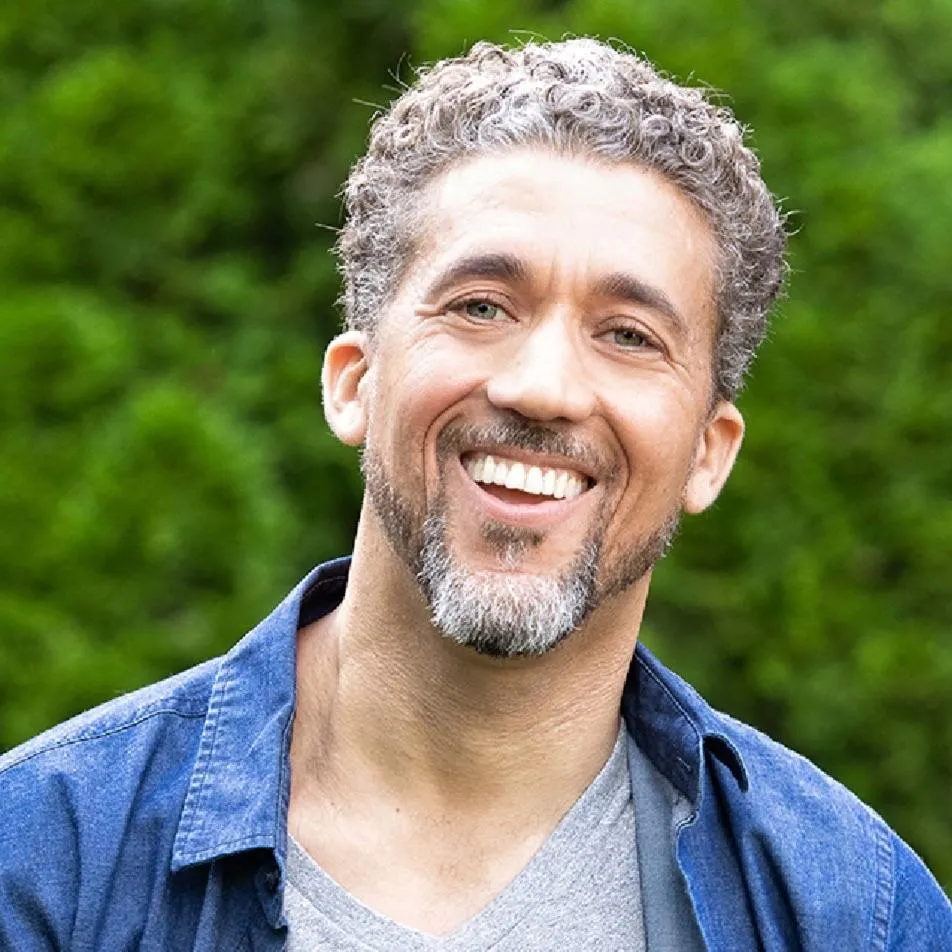
Hi, I’m Scott Norman.
My wife and I struggled with sleep for a long time, pushing through tired, groggy days while balancing highly irregular schedules.
I spoke with a doctor, completed a sleep study, and even tested a CPAP machine. That medical evaluation was important. Medical sleep problems deserve to be properly evaluated.
But even after taking those steps, I still needed a practical way to understand what was happening in my own nights.
I’m a lifelong educator—not a physician. I’ve spent years teaching, coaching, researching, making connections, and turning confusing information into practical next steps.
So I approached sleep the same way. I dug into the science, cut through the noise, and organized what I learned into the process I wish I had been given: enough science to make the practical choices understandable, and enough flexibility to fit into an actual human life.
That process became Sleep Flow.
Implementation Circle
You Won’t Be Handed a Course and Left Alone With It.
The Founding Member Implementation Circle runs from September 20 through October 19, 2026.
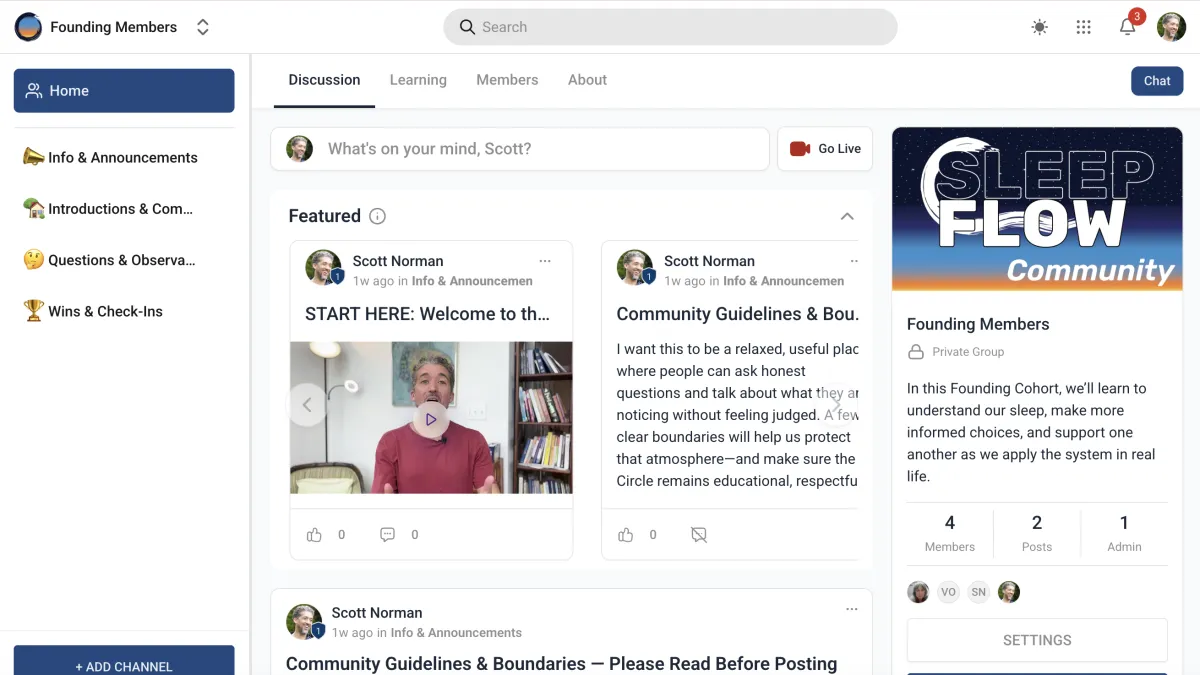
Inside the online community, you can:
Ask questions about the educational material and exercises.
Share observations, difficult moments, and small wins without posting private worksheet details.
Compare experiences with other participants without assuming that everybody needs the same solution.
Get help applying the framework when real life does not resemble the ideal example.
Normally receive a response within two business days during the active Circle.
After the active Circle concludes, Founding Members retain read-only alumni access so they can revisit the shared questions and experiences.
Community Note: The Circle supports education and shared experience. It does not provide diagnosis, medication advice, or individualized medical treatment. Questions suggesting chronic insomnia or another sleep disorder will receive an appropriate referral response.
Founding Cohort Access to the
Complete Sleep Flow System
Because this is the first public release of Sleep Flow, you can join the Founding Cohort for a one-time payment of
$47 through September 27, 2026.
Immediate access to the Welcome Module and complete Module One, so you can begin your starter Sleep Signature snapshot tonight.

Module One includes 4 guided worksheets that turn experiences from your own nights into useful observations.
Modules Two, Three, and Four as they release weekly on September 27, October 4, and October 11.
The September 20~October 19 Implementation Circle, including community support and Scott’s normal two-business-day response window.
(Read-only alumni community access after the active Circle concludes.)
Lifetime access to the complete course and all future Sleep Flow system updates.
A 30-day money-back guarantee beginning when you first access the course materials.
Regular Price: $98
Founding Cohort Price through
September 27: $47
One more supplement, app, gadget, tracker, or pillow can easily cost as much as this program—without telling you whether it actually matches the problem you are trying to solve.
The real value is not simply paying less than you might spend on another product.
It is learning how to decide what may actually be worth trying.
Immediate access • Lifetime course access and updates • Founding price ends September 27
No special gadgets, furniture, supplements, or equipment are required.
You need a way to watch the lessons, tell the time, and take notes. If you already use a tracker or other sleep tools, Sleep Flow can help you treat what they provide as information rather than another score you have to achieve.
Try the Process. Keep the Clarity.
Or, Get Your Money Back.
Your 30-day money-back guarantee begins when you first access the course materials.
Use the lessons. Complete the exercises. Bring your questions to the Implementation Circle and give the process an honest shot.
If you are not gaining more clarity, a calmer relationship with bedtime, and a better sense of what to do on difficult nights, email me for a refund.
No questions asked. No hard feelings.
Sleep Flow May Be a Good Fit If…
You generally sleep adequately but want greater consistency, confidence, or flexibility.
You experience recurring difficulty falling asleep, staying asleep, or waking rested, but are not looking for the course to diagnose or treat a sleep disorder.
You have accumulated tips, routines, remedies, devices, or conflicting rules and want a practical way to decide what fits.
Bedtime has started to bring worry, dread, frustration, monitoring, or a “tired but wired” feeling.
Your schedule includes stress, social evenings, caregiving, irregular hours, or unpredictable weeks that make a perfect routine unrealistic.
You are willing to watch short lessons, complete simple observations, and experiment gently for two to four weeks.
Sleep Flow Is Not a Substitute for Appropriate Medical or Clinical Care.
Sleep Flow is educational. It is not medical treatment, is not CBT-I, and does not diagnose or treat chronic insomnia or another sleep disorder.
If you suspect sleep apnea, restless legs syndrome, a circadian-rhythm disorder, or another medical sleep condition, seek evaluation from a qualified professional.
If your insomnia is persistent or chronic, a complete multicomponent CBT-I program may be the appropriate first-line treatment.
If sleepiness is making driving, work, caregiving, or another safety-sensitive activity dangerous, seek prompt professional evaluation rather than relying on a self-paced course.
If you want a passive magic fix and do not want to observe or adjust anything, Sleep Flow is unlikely to be a good fit.
Frequently Asked Questions
“I’ve tried everything. How is Sleep Flow different?”
Most of what you have tried has probably been a tactic or product: a tip, routine, supplement, app, gadget, or environmental change. Sleep Flow does not simply add another tactic to the pile. It teaches you how to recognize what may be influencing your sleep, notice the patterns that matter, and choose a response that fits the kind of night you are actually having. Free tips give you options. Sleep Flow gives you the ability to choose.
“What do I receive immediately?”
You receive immediate access to the Welcome Module, the complete Module One, four guided worksheets, and the online community. You can start tonight by creating your Starting Snapshot and beginning to identify useful clues from your own sleep experiences.
“Why are the remaining modules released weekly?”
Sleep Flow is designed to be applied, not binged. The weekly Founding Cohort rollout gives you time to use each part before adding the next one. Module Two releases September 27, Module Three October 4, and Module Four October 11. Once released, every module remains available through your lifetime access.
“How long will this take? I’m already exhausted.”
The lessons are short and structured for tired brains. Many sections can be completed in about fifteen minutes, and one section per day is a reasonable average. The complete program is designed to be used over roughly two to four weeks, but it is self-paced. You do not need to turn sleep into a second job.
“When should I expect to notice a difference?”
Everyone is different, and Sleep Flow does not promise sleep on a particular timetable. The early exercises are designed to help you notice clearer patterns and feel less lost about what to do on a difficult night. Across two to four weeks of light, consistent application, the goal is greater clarity, calmer bedtimes, and more confidence in your decisions.
“What if my schedule is chaotic?”
That is one of the reasons Sleep Flow exists. The goal is not to force every person into the same bedtime. You will learn to build a dependable sleep home base while adapting the surrounding routine to busy evenings, irregular weeks, stress, social plans, and other changes in real life.
“What if I want a regular bedtime and morning routine?”
Sleep Flow supports regularity when your life allows it. The difference is that you will understand what each part of the routine is meant to support and how to create lighter or recovery versions when the full routine is not possible.
“Do I have to give up screens, evenings out, or everything I enjoy at night?”
No. The course explains how light, timing, stimulation, and recent activity can affect sleep, but it does not require you to live like a monk. The goal is to make informed tradeoffs and build something sustainable—not create a fragile routine that only works when life is perfect.
“Will this help if hormones or life-stage changes are affecting my sleep?”
Hormonal and life-stage changes can affect sleep and may require appropriate medical guidance. Sleep Flow does not diagnose or treat hormonal conditions. Its core framework can help you notice changing patterns, reduce avoidable contributors, and make more informed decisions about what to discuss with a qualified professional.
“Is this a replacement for a doctor, sleep study, or CBT‑I?”
No. Sleep Flow is educational, not medical treatment or CBT-I. If you suspect sleep apnea, restless legs syndrome, chronic insomnia, a circadian-rhythm disorder, or another medical sleep condition, seek evaluation from a qualified clinician. Chronic insomnia may call for a complete multicomponent CBT‑I program.
“What if my partner is the one who cannot sleep?”
A partner’s sleep can affect the entire household. You may go through the material together and use the same framework while keeping your individual observations and needs separate. The program does not assume that both people require the same response.
“What happens inside the Implementation Circle?”
From September 20 through October 19, Founding Members can ask educational questions, share observations, compare experiences, and get help applying the exercises. Questions will normally receive a response from Scott within two business days during the active Circle. Afterward, Founding Members retain read-only alumni access.
“What if I’m skeptical this will work for me?”
That is reasonable—especially if you have spent time and money on things that did not last. Sleep Flow is not a magic fix and cannot promise that every night will become easy. It gives you a structured way to understand your own patterns, make a more informed choice, and learn from what happens. The 30-day guarantee gives you time to evaluate whether that process is creating more clarity and capability for you.
Stop Guessing Your Way
Through Another Night.
Start tonight with Module One.
Begin creating your starter Sleep Signature snapshot. Then continue through the weekly modules with community support as you build a flexible system you can use when bedtime gets difficult.
Sleep does not have to keep feeling like a nightly fight,
or another test you might fail.
The Founding Cohort Price of $47 ends September 27, 2026.
Immediate access • Lifetime course access and updates • Founding Cohort price ends September 27